

In 2007, a group of Canadian researchers set out to answer a question that had yet to receive a convincing response. Does the physical proximity of a casino to a university campus affect how actively students become involved in gambling and how frequently they experience related problems? The authors also chose to examine a second, equally significant aspect: differences in gambling behavior between men and women.
The hypotheses were formulated in advance. The authors expected men to demonstrate a wider range of gambling activities and a higher rate of problem gambling. It was also anticipated that students at universities located near a major casino would gamble more frequently and across a greater variety of formats, with a higher proportion of pathological gamblers among them.
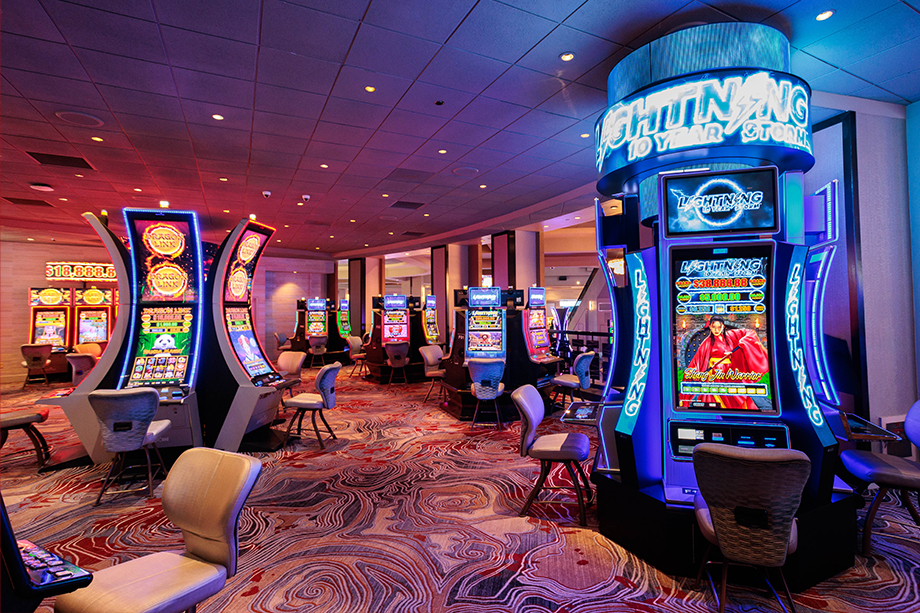
Four universities, fifteen hundred questionnaires
The study covered 1,579 students from four universities in the province of Ontario. The institutions were deliberately divided into two categories.
Near a casino:
- Brock University
- University of Windsor
Further from a casino:
- University of Guelph
- Wilfrid Laurier University
Participants were recruited through several channels, including university volunteer subject pools. Questionnaires were completed under varying conditions: at large introductory lectures, at home, or in common areas on campus. The specific format depended on the procedure adopted by each institution. The surveys collected demographic information and detailed data on gambling behavior.
The measurement instrument and problem scale
Problem gambling was assessed using the South Oaks Gambling Screen (SOGS), a widely used instrument in research involving adolescents and student samples. Based on their scores, each participant was assigned to one of four categories:
- no problems
- some problems
- moderate problems (problem gambling)
- pathological gambling
In addition, students were asked whether they had participated in any of 17 types of gambling activities in the past month, including slot machines and casino table games.
The overall picture: one in five showing signs of problems
The distribution across the full sample was as follows:
- 77% (1,219 individuals) had no problems
- 19% (293 individuals) showed some problems
- 3% (52 individuals) fell into the moderate problems category
- 1% (15 individuals) were classified as pathological gamblers
Among students with no problems, 66% attended universities located further from a casino, while only 34% were enrolled at institutions near one. Among pathological gamblers, the proportion was reversed: 80% studied near a casino and only 20% were at more distant institutions.
A significant association was found for only two types of gambling
Casino proximity was statistically associated with only 2 of the 17 types of gambling:
- casino slot machines
- casino table games
For the remaining 15 types — from lotteries to sports betting — no significant differences were found between students at "near" and "distant" universities.
The gender gap proved quite substantial
No gambling problems were reported by 81% of women compared to 64% of men. The gap widened further along the scale:
- some problems: 16% among women versus 27% among men
- moderate problems: 2% versus 7%
- pathological gambling: 0.5% versus 2%
Men were more frequently involved in: lotteries, Pro-Line, casino table games, blackjack, card games, dice games, games of skill, sports pools, and speculative investments.
Women were more frequently involved in: instant-win lottery tickets, bingo, casino slots, and draws and raffles.
Correlation, not causation
The authors emphasized that the findings are correlational in nature. Casino proximity may be associated with certain behaviors; however, the study does not establish that proximity is the cause of those behaviors.
What this means in practice
Students at universities near a casino were indeed more frequently involved in casino-specific formats, primarily slots and casino table games. For non-casino formats, no notable differences were observed.
The authors called for these findings to be taken into account when planning the placement of new gambling venues, particularly near educational institutions. In their view, the industry should recognize that physical accessibility simultaneously affects revenue and the risk of problem behavior among those who live or study nearby.
Editor's note
The study was conducted in 2007 and should not be taken as a description of the current state of affairs, particularly with regard to online gambling. Nevertheless, the work clearly demonstrates that the factor of accessibility and the influence of the university environment on gambling behavior have been subjects of research for well over a decade.
Online accessibility as a new form of proximity
Several years after the Ontario study, a similar question arose in the context of the internet. A project by the University of Alberta, conducted under the Alberta Gambling Research Institute, surveyed students about their involvement in online gambling. Of 526 respondents, 185 (35.2%) reported having gambled online at least once in the preceding 12 months. The researchers attributed this high figure to several factors, among which they specifically highlighted the aggressive marketing of online casinos. No-deposit bonuses, free spins, and promo codes effectively eliminate the financial barrier to entry. In preparing this article, it was sufficient to see website listings of such offers for the Canadian market to appreciate the scale: dozens of operators simultaneously advertise no-deposit welcome offers.
This level of accessibility, according to the Alberta authors, exerts an influence on students no less powerful than the physical casino proximity described in the Ontario study. Both studies — separated by years and formats — point to the same pattern: the easier the access to gambling, the higher the level of involvement among students.