

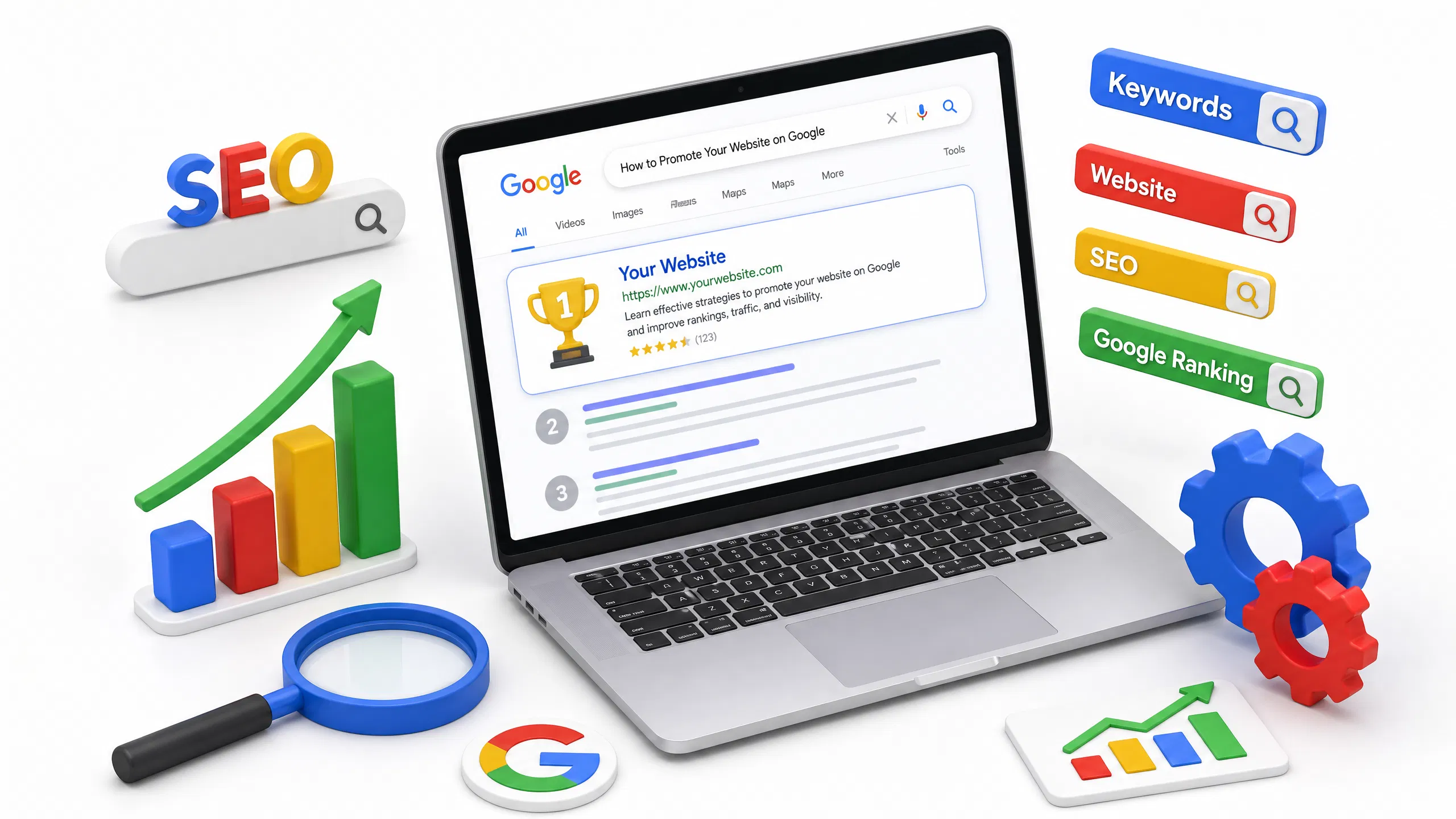
Getting your site to rank on Google is no longer optional — it's the difference between a thriving online business and a digital ghost town. Effective website promotion combines technical optimization, quality content, and strategic outreach to help search engines understand, trust, and reward your site with visibility. This guide walks you through every essential step of website promotion on Google, from foundational SEO to advanced techniques that drive long-term organic traffic.
What Is Website Promotion and Why Does It Matter?
Website promotion is the process of increasing your site's visibility, authority, and traffic through a combination of search engine optimization, content marketing, link building, and technical improvements. When done correctly, website promotion turns your site into a magnet for qualified visitors who are actively searching for what you offer.
Google processes over 8.5 billion searches per day, and the top three organic results capture more than 50% of all clicks. If your website isn't showing up on the first page for your target keywords, you're invisible to the majority of your potential customers. That's why investing in website promotion is one of the highest-ROI activities any business can pursue.
Step 1: Build a Strong Technical Foundation
Before any website promotion strategy can succeed, your site needs to be technically sound. Google rewards sites that load fast, work on mobile, and provide a smooth user experience.
Start with Core Web Vitals — Google's official metrics for page experience. Aim for a Largest Contentful Paint (LCP) under 2.5 seconds, an Interaction to Next Paint (INP) under 200 milliseconds, and a Cumulative Layout Shift (CLS) below 0.1. Tools like Google PageSpeed Insights and Lighthouse will tell you exactly where you stand.
Make sure your site is fully mobile-responsive, since Google uses mobile-first indexing. Install an SSL certificate so your URLs use HTTPS. Submit an XML sitemap through Google Search Console and ensure your robots.txt file isn't blocking important pages. These technical basics form the bedrock of all website promotion efforts.
Step 2: Master Keyword Research
You can't promote your website effectively without knowing what your audience is searching for. Keyword research reveals the exact terms people type into Google when looking for products, services, or information related to your business.
Use tools like Google Keyword Planner, Ahrefs, Semrush, or the free Ubersuggest to find keywords with a healthy balance of search volume and competition. Focus on a mix of short-tail keywords (broad, high-volume terms) and long-tail keywords (specific, lower-volume phrases that convert better). Long-tail keywords are especially valuable for new websites, since they have less competition and attract highly motivated searchers.
Group your keywords by search intent — informational, navigational, commercial, or transactional — and map each one to a specific page on your site. This keyword-to-page alignment is the backbone of any serious website promotion campaign.
Step 3: Create High-Quality, Helpful Content
Google's algorithms have evolved to prioritize content that genuinely helps users. The Helpful Content System, combined with E-E-A-T principles (Experience, Expertise, Authoritativeness, Trustworthiness), rewards content created by real experts and penalizes thin, AI-spun, or purely SEO-driven pages.
When producing content for website promotion, focus on solving real problems. Write in-depth articles that cover topics comprehensively, include original insights or data when possible, and answer the questions your audience is actually asking. Use clear headings, short paragraphs, and visual elements like images, infographics, and videos to improve readability and time on page.
Update your existing content regularly. Refreshing older posts with new information, statistics, and examples often produces faster ranking gains than publishing new content from scratch. Consistency matters too — a publishing schedule of two to four high-quality pieces per month will outperform sporadic bursts of activity.
Step 4: Optimize On-Page SEO
On-page SEO ensures Google understands what each page is about and who it should be shown to. Effective website promotion requires careful attention to several on-page elements.
Craft compelling title tags that include your target keyword near the beginning and stay under 60 characters. Write meta descriptions that summarize the page and encourage clicks — aim for 150 to 160 characters. Use a single H1 tag per page that clearly states the topic, and structure subsections with H2 and H3 tags that incorporate related keywords naturally.
Optimize your URLs to be short, descriptive, and keyword-rich. Add descriptive alt text to every image to improve accessibility and help Google understand your visual content. Use internal linking to guide visitors to related pages and distribute link equity across your site. Finally, add structured data (schema markup) so Google can display rich results like star ratings, FAQs, and product information directly in search.
Step 5: Build High-Quality Backlinks
Backlinks remain one of the strongest ranking signals in Google's algorithm. Each link from a reputable website acts as a vote of confidence in your content. However, modern website promotion requires quality over quantity — a handful of links from authoritative sites will outperform hundreds of low-quality links.
Effective link-building strategies include guest posting on industry blogs, creating linkable assets like original research or free tools, reaching out to publications that have cited similar content, and earning mentions through PR efforts and digital partnerships. Broken link building — where you find dead links on other sites and offer your content as a replacement — is another reliable technique.
Avoid black-hat tactics like buying links, participating in link schemes, or using private blog networks. Google's Penguin algorithm and manual reviewers can detect these patterns and penalize your site, often setting your website promotion efforts back by months or years.
Step 6: Leverage Google Business Profile and Local SEO
If your business serves a specific geographic area, local SEO is non-negotiable. Claim and fully optimize your Google Business Profile, including accurate business hours, photos, services, and categories. Encourage satisfied customers to leave reviews and respond to every review thoughtfully.
Build local citations by listing your business on directories like Yelp, Bing Places, Apple Maps, and industry-specific platforms. Make sure your name, address, and phone number (NAP) are identical across every listing. Local content — like neighborhood guides or city-specific landing pages — also strengthens your local website promotion strategy.
Step 7: Use Google Search Console and Analytics
You can't improve what you don't measure. Google Search Console shows which queries bring people to your site, which pages have indexing issues, and how your click-through rates compare to your competitors. Google Analytics 4 tracks user behavior, conversions, and traffic sources, giving you the data to refine your website promotion strategy continuously.
Set up conversion goals, monitor your top-performing pages, and identify pages that are receiving impressions but few clicks — these are prime candidates for title and meta description optimization. Watch for sudden drops in traffic, which often indicate technical issues or algorithm updates that need immediate attention.
Step 8: Amplify Through Social Media and Email
While social signals aren't direct ranking factors, social media and email marketing amplify your content's reach, drive referral traffic, and increase the chances of earning backlinks. Share every new piece of content across the platforms where your audience is active, and build an email list so you can drive consistent traffic to new content without relying solely on Google.
Step 9: Consider Paid Promotion to Accelerate Results
Organic website promotion takes time — typically three to six months before you see meaningful traction. To accelerate visibility, complement your SEO efforts with Google Ads. Pay-per-click campaigns put your site at the top of search results immediately and provide valuable keyword data you can feed back into your organic strategy. Remarketing campaigns also help re-engage visitors who didn't convert on their first visit.
Common Website Promotion Mistakes to Avoid
Even experienced marketers make critical errors that derail their website promotion efforts. Avoid keyword stuffing, which makes content unreadable and triggers Google penalties. Don't ignore mobile optimization or page speed — these are non-negotiable in 2026. Stay away from duplicate content, both within your own site and copied from other sources. And never expect overnight results; SEO is a long-term investment, not a quick fix.
Final Thoughts
Successful website promotion on Google isn't about gaming the algorithm — it's about building a genuinely useful, technically excellent, and well-connected web presence. Focus on serving your audience first, follow Google's best practices, and stay consistent over the long term. The websites that win in search aren't necessarily the biggest or the oldest; they're the ones that combine smart technical foundations, helpful content, authoritative backlinks, and continuous improvement.
Start with the fundamentals, track your progress through Search Console and Analytics, and refine your approach based on real data. With patience and the right strategy, your website promotion efforts will compound over time and deliver sustainable traffic, leads, and revenue for years to come.