
ContPark: The Perfect Blend of UI/UX and Logistics
Digital products for logistics live in a tough environment: high cargo volumes, strict time windows, and constant pressure on margins. In this context, the interface is not just “visual design” – it is a working tool for planners, gate clerks, dispatchers, finance teams, and management. A clear, predictable UI helps teams process more moves, resolve incidents faster, and keep the terminal under control even on the busiest days. ContPark was built with this reality in mind and combines modern product design practices with deep understanding of container terminal operations.
Instead of forcing users to adapt to the system, ContPark follows the way people actually work in yards and terminals. Screens are structured around real tasks: managing gates, planning stacks, monitoring rail or vessel operations, checking invoices, and preparing reports. This approach turns the platform into a daily command center rather than just another IT system that needs constant explanations.
Why UI/UX Matters in Logistics
Container terminals and depots run dozens of parallel workflows: gate-in and gate-out processes, storage planning, reefer checks, damage inspection, repair approvals, billing, and communication with lines and customers. If the interface is overloaded, inconsistent, or slow, every step in these chains takes longer and the risk of mistakes grows.
A well-structured UI/UX helps teams handle this complexity without adding stress. The screen shows what is important right now, hides secondary details until they are needed, and guides the user through the next logical action. For logistics, this translates directly into fewer rehandles, shorter queues, and clearer communication with partners.
In practical terms, a thoughtful interface means:
- Fast decision-making – Operators and supervisors see key indicators, alerts, and task lists at a glance, without digging through multiple menus or reports.
- Reduced human error – Intuitive layouts, confirmations for critical actions, and clear status indicators help avoid wrong container selections or incorrect move types.
- Seamless automation – Dashboards and interactive panels simplify working with automated rules, pre-defined workflows, and EDI events, instead of hiding them behind technical screens.
- Comfortable scaling – As the terminal grows, the same interface supports new users, processes, and locations without turning the system into a maze.
How ContPark Leads in UI/UX for Logistics
ContPark is designed as a working environment for people who spend the whole day in the system. The focus is on clarity, speed, and consistency across all modules. Each user sees tools that match their role: a planner, a gate clerk, a repair coordinator, a finance specialist, or a terminal manager.
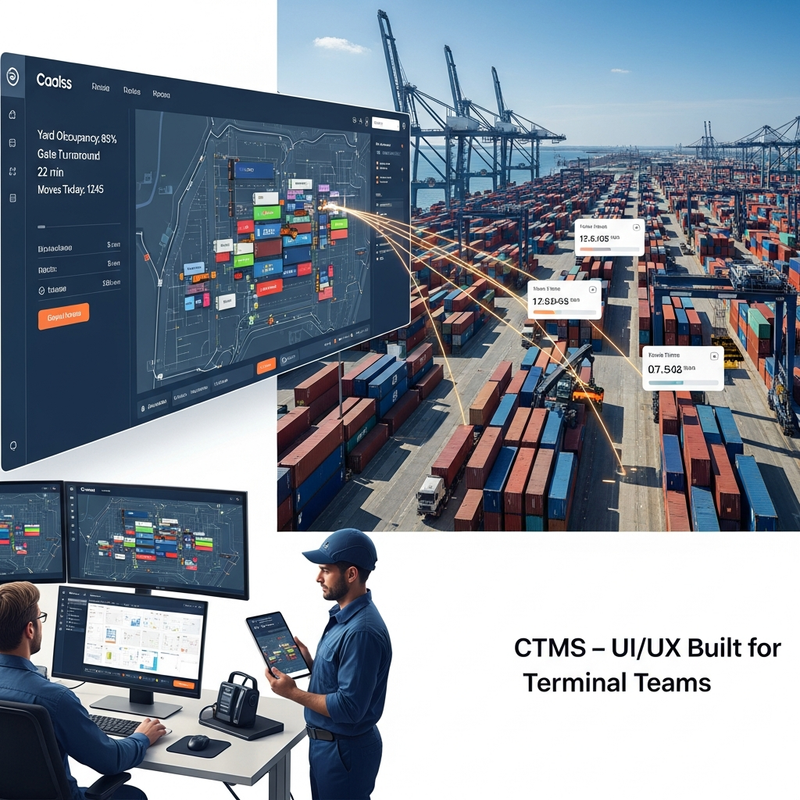
- Real-time analytics – Interactive dashboards show yard occupancy, gate performance, move counts, and service levels per client. Users can drill down from high-level KPIs to specific containers or operations without switching between systems.
- Adaptive interface – Layouts, widgets, and filters can be adjusted to fit different workflows. A dispatcher needs quick access to task queues, while management looks at trends and exceptions; ContPark supports both on the same platform.
- Mobile-friendly workflows – Many operations happen away from the office. ContPark supports tablets and smartphones so inspectors, surveyors, and yard staff can work directly from the yard, updating statuses and attaching photos on the spot.
- Integrated automation – The system offers prompts, pre-filled forms, and smart defaults based on previous actions. Operators do not have to remember every rule – the interface helps them apply best practices consistently.
Navigation, color codes, and status icons are unified across modules. Once a user has learned the logic in gate screens, the same patterns appear in stack planning, repair, or billing. This reduces training time and makes it easier to move people between teams when workload changes.
Optimizing Terminal Operations with ContPark
Efficiency in logistics is not only about automation or EDI integration. It is also about how easily people can use the system under time pressure. When UI/UX is aligned with real workflows, the terminal gains more than just a new software product – it gains a digital layer that supports every operational decision.
ContPark brings usability and operational logic into one environment. Teams work in a single interface that covers gate, yard, rail, and billing processes. Management receives consistent data in real time, planners see the impact of their decisions immediately, and customer-facing staff always have up-to-date information at hand.
Experience this approach in practice with ContPark’s container terminal management system – a platform where product design and terminal operations are developed together, so the interface helps the business move faster instead of slowing it down.
Designed Around Real Terminal Tasks
ContPark is not a generic business application adapted to logistics; it is built around container terminals, depots, and yard operations from the start. Typical daily activities are reflected in the interface: assigning slots, planning moves, handling exceptions, managing free time and storage, confirming releases, or preparing operational reports for customers.
Instead of long text menus, users see clear action buttons, contextual panels, and concise forms that show only what is needed at this step. Complex scenarios – for example, handling damaged containers, special storage conditions, or priority moves – are supported through guided flows, which reduces the risk of forgetting a critical step.
This design approach makes the platform comfortable both for experienced operators, who need speed and control, and for new colleagues, who must quickly learn the system without a thick manual.