
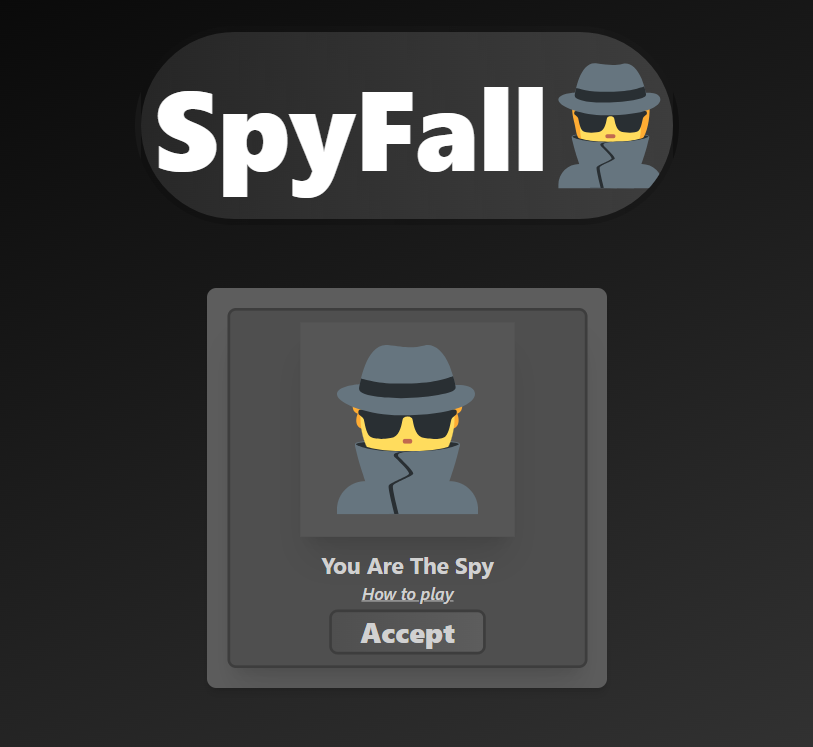
Spyfall can be a great workplace game when it is framed as a light, optional activity rather than a test of confidence or social skill. The game’s format is simple: most players know a secret location, one player is the spy, and everyone asks indirect questions to identify the person who does not know the setting. The spy wins by avoiding detection or correctly guessing the location.
Play Online Spyfall https://www.spyfall.live/
For work teams, the best questions are playful, inclusive, and focused on imaginary places rather than personal lives. They should help colleagues participate without requiring them to disclose private information, make jokes at someone else’s expense, or rely on niche cultural knowledge. A well-run round can encourage active listening, quick thinking, and shared laughter—all in 10 minutes or less.
Ground Rules for Work
Before the first round, establish a few clear expectations. The goal is to spot the fictional spy, not to judge a real colleague. Psychological safety is stronger when team activities use respectful language, avoid blame, and make participation feel voluntary.
Use these rules to keep the game comfortable:
-
Choose neutral, familiar locations such as a library, airport, restaurant, museum, hotel, supermarket, zoo, or coffee shop.
-
Keep questions about the location, the role, or imaginary logistics—not personal income, relationships, health, religion, politics, appearance, or family.
-
Allow a “pass” option. A player can ask for another question or say they are not sure how to answer without being mocked for it.
-
Avoid treating hesitation, accents, camera-off status, or language mistakes as evidence that someone is the spy.
-
Keep answers short: one or two sentences are enough.
-
Use a five- to eight-minute timer so the activity remains an icebreaker rather than a long meeting segment.
The core Spyfall rule is that players should ask short, context-based questions and answer without revealing the secret location directly. That makes the game a useful communication exercise: colleagues must be specific enough to sound informed but subtle enough to protect the shared secret.
Universal Safe Questions
These prompts work for nearly every workplace-friendly Spyfall location. They are ideal at the beginning of a round because they reveal broad context without making the answer obvious.
-
Would you visit this place in your free time?
-
What is the best time to arrive here?
-
What would make this place unusually busy?
-
What is the first thing a new visitor should know?
-
Would you need to plan ahead before coming here?
-
What is the most useful thing to bring?
-
What could make someone feel lost here?
-
Would this place be comfortable in bad weather?
-
What is one thing people should not forget?
-
What is the most common reason people come here?
-
Would you expect this place to be noisy or quiet?
-
What is the most inconvenient part of being here?
-
Would children enjoy this place?
-
What might surprise a first-time visitor?
-
Would you expect people to stay here for a long time?
For example, if the secret location is a library, asking “What might surprise a first-time visitor?” could lead to answers about quiet areas, borrowing rules, events, or the variety of resources. None of those answers needs to say “books” or “library,” but informed players can still sound natural.
Questions About Roles
Role-focused questions help players test whether someone understands the setting without directly naming its defining features. They work particularly well in locations with staff, visitors, customers, or specialists.
-
What is the most important responsibility here?
-
Who is most likely to be under pressure?
-
What kind of training would be useful here?
-
Who would be the best person to ask for help?
-
What task would take the longest in this place?
-
Would people here work mostly alone or with others?
-
What would a new employee need to learn first?
-
Which role would require the most patience?
-
What kind of mistake would be easy to make here?
-
Would anyone need special equipment to do their job?
-
Who is most likely to interact with visitors?
-
What role would be the least relaxing?
-
Would people need to follow a strict schedule here?
-
What would make someone good at working here?
-
Who might have the most responsibility at the end of the day?
These prompts are useful because they reward observation and imagination rather than personal experience. At an airport, colleagues might mention staff dealing with schedules, safety, luggage, or customers. At a restaurant, they might refer to service, preparation, timing, or managing busy periods.
Questions About Practical Details
Practical questions create useful clues, but they should remain broad enough that the spy cannot solve the location after one answer. Use them later in a round, once the group has heard a few responses.
-
Would you need to wait in line here?
-
What could delay someone here?
-
Would you need a ticket, booking, or permission to enter?
-
What is the easiest way to get around this place?
-
Would there be clear rules for visitors?
-
What would people complain about most often?
-
What would make a visit more enjoyable?
-
Would people spend money here?
-
Is it easy to leave whenever you want?
-
What is the most useful sign or instruction someone might see?
-
Would you expect security or supervision here?
-
What could create confusion for a group of visitors?
-
Would you need to dress differently for this place?
-
What would be the worst time to arrive?
-
What would make someone want to return?
A question such as “What could delay someone here?” is more useful than “Are there flights here?” The first could apply to an airport, hospital, restaurant, train station, government office, or amusement park. It gives informed players room to answer while forcing the spy to make a careful guess.
Light and Imaginative Prompts
These questions add humor without targeting anyone personally. Use them when the team is already comfortable with the game and you want more creative answers.
-
What would be the strangest thing to see here?
-
What fictional character would fit in best here?
-
What snack would be most useful in this place?
-
What would be a terrible outfit to wear here?
-
If this location had a soundtrack, what would it sound like?
-
What would be the least useful item to bring?
-
What would make an excellent souvenir from this place?
-
What would be a funny reason to get banned from here?
-
What would an inexperienced visitor do wrong first?
-
If this place had a mascot, what might it be?
-
What would be the worst superpower to have here?
-
What celebrity would struggle most in this location?
-
What would make this place feel like a movie scene?
-
What is the most dramatic way to arrive here?
-
If this place had a slogan, what could it be?
Keep imaginative prompts connected to the fictional setting. Avoid jokes about real colleagues, job performance, office habits, or personal characteristics. The activity should feel inclusive, especially for new hires, remote participants, and people working in a second language.
Facilitation Tips
Choose locations that everyone can understand. A restaurant, library, hotel, beach, museum, zoo, airport, school, and supermarket are safer choices than highly technical workplaces or culturally specific venues. Give players the option to pass on a difficult question, and never turn a pass into a reason for ridicule.
For an online team, send roles through direct messages and collect votes through a private poll or message. For an in-person team, use folded paper cards. A six- to ten-minute round is generally enough, followed by a quick reveal and a short laugh about the best clues. Standard online Spyfall formats commonly use rounds in that range, with smaller groups benefiting from shorter timers.
Most importantly, end on a positive note. Reveal the location, congratulate the spy if they stayed hidden, and mention a clever question or funny answer. Spyfall succeeds at work when it creates a shared moment of curiosity—not when it makes people feel exposed.